
Why Med Spas Lose Clients to Missed Calls (and the Fix)
- Triumph Tech Solutions
%20(1).png/v1/fill/w_320,h_320/file.jpg)
- Aug 13
- 5 min read
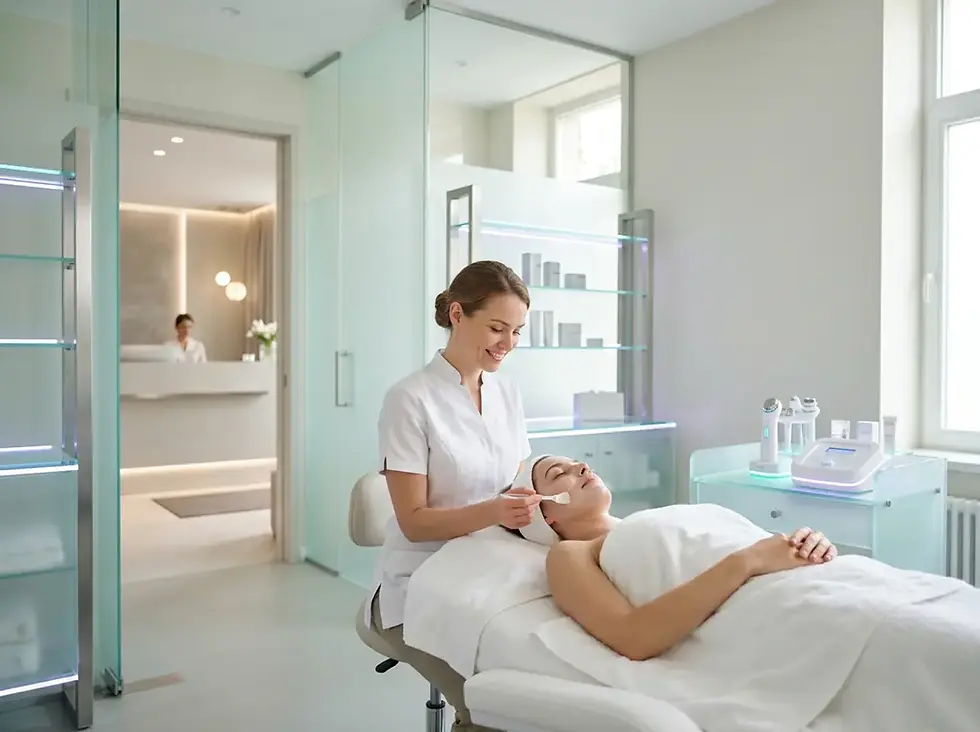
A med spa can answer every call while the front desk is busy by putting an AI voice agent on the line. It picks up instantly, every time, books appointments straight into your calendar, answers common treatment questions, and works 24/7. Calls that used to hit voicemail turn into booked appointments. In this business, whoever answers first usually wins the client, so the spa that always answers wins more of them.
Why do med spas miss so many calls?
Med spas miss up to 35% of incoming calls because the people who answer the phone are the same people performing treatments. An esthetician with gloved hands in the middle of a facial can't stop to book a consult. Add lunch breaks, after-hours inquiries, and the call spike that follows every promo, and a large share of your demand never reaches a human.
The catch is who's calling. New client inquiries are your highest-value calls and your least patient ones. Most people who reach voicemail never leave a message. They just dial the next name on the list.
How much revenue does a med spa lose from missed calls?
Most med spas lose between $75,000 and $150,000 a year to missed calls. At a $600 average booking and a 30% call-to-booking rate, just three missed calls a day adds up to more than $130,000 in lost revenue over a year.
It compounds. The average med spa client is worth more than $7,800 in lifetime value, so a missed call is rarely one lost appointment. It's a lost package, a lost membership, and every rebooking that would have followed. Around 85% of callers who hit voicemail never call back, so most of that money leaves quietly.
Run your own numbers and it gets uncomfortable fast. Take your average ticket, multiply by your booking rate, then multiply by the calls you miss in a week. A spa missing ten calls a week at a $500 average and a one-in-three close rate is leaving about $1,650 on the table every week, or roughly $85,000 a year, before you count the rebookings those clients would have made. Most owners undercount this, because a missed call leaves no trace. There's no voicemail, no note, no record. The revenue simply never shows up, so it never gets counted.
Can an AI voice agent actually book med spa appointments?
Yes. A well-built AI voice agent answers in a natural voice, understands what the caller wants, checks live availability, and books straight into your scheduling system. It can explain treatments, answer pricing and prep questions, qualify new client inquiries, and text a confirmation before it hangs up.
It handles every line at once, so a rush of calls after a weekend promo doesn't overwhelm anyone. Your front desk stops choosing between the client in the chair and the client on the phone, because both get handled. This is exactly what we built VozClinic to do for medical and aesthetic clinics: a bilingual voice agent that answers, books, and follows up so the calendar stays full.
What should a med spa voice agent actually be able to do?
A med spa voice agent earns its place only if it does the front desk's real job, not just answer and take a message. At a minimum it should book, reschedule, and cancel directly in your scheduling software, know your treatment menu and pricing well enough to answer the routine questions, and qualify new client inquiries so the high-value calls get flagged and followed up fast.
A few specifics worth insisting on. It should connect to the booking system you already run, whether that's Boulevard, Vagaro, Aesthetic Record, or something else, so appointments land on the real calendar instead of a separate inbox someone has to re-key later. It should text a confirmation and reminders to cut no-shows. It should speak your clients' language, which in a lot of markets means fully bilingual. And it should know when to stop and hand off to a human, because a nervous first-time injectable client sometimes needs a person, not a booking. Anything less is just a more expensive voicemail.
What does a day with zero missed calls look like?
Picture a normal Saturday with the agent on the line. Your one front desk person is checking in a client while two more calls come in at once. Both get answered on the first ring. One is an existing client moving her Botox appointment, handled in under a minute. The other is a new lead who saw your before-and-after reel last night and wants a consult. She gets her questions answered, books a $900 package for Tuesday, and gets a confirmation text before she hangs up.
None of that touched your staff. The client in the chair kept their full attention, and the two calls that used to become voicemails became a kept appointment and a new client instead. Multiply that across every busy hour of the week and the decision stops being about technology. It becomes about how many bookings you are willing to keep losing.
How does an AI voice agent handle after-hours booking requests?
An AI voice agent works around the clock, so a call at 9 PM on a Sunday gets the same instant booking as one at 11 AM on a Tuesday. After-hours and weekend inquiries become confirmed appointments instead of voicemails you return two days too late.
That matters because people research and book aesthetic treatments on their own time, usually at night. The agent can also send reminders and handle reschedules, which trims the no-shows that quietly drain a med spa's schedule.
Will an AI voice agent sound robotic to my clients?
A cheap one will. A properly built one won't. Modern voice agents use natural speech and understand intent, so the call feels like talking to a calm, well-trained receptionist who never has an off day. The difference is in the build, not the category.
For a med spa, tone is part of the brand. The agent should sound warm, on-brand, and confident about your treatments. That's a build decision, which is why the agent you put on the phone matters as much as the fact that you have one.
Is an AI voice agent HIPAA-compliant for a med spa?
It can be, and for a med spa it should be. Because med spas handle protected health information, the agent needs to be built with proper safeguards: a signed BAA, encryption, and strict access controls. Compliance isn't automatic with every tool, so it has to be part of the setup from day one.
This is one more reason to work with a builder who understands clinics instead of bolting on a generic answering bot. The agent has to protect client data while it books the appointment.
LNL AI Agency builds voice agents that answer every call, book the appointment, and keep your calendar full. If your med spa is losing calls during treatments or after hours, book a call with us and we'll map out a voice agent for your front desk.


Comments